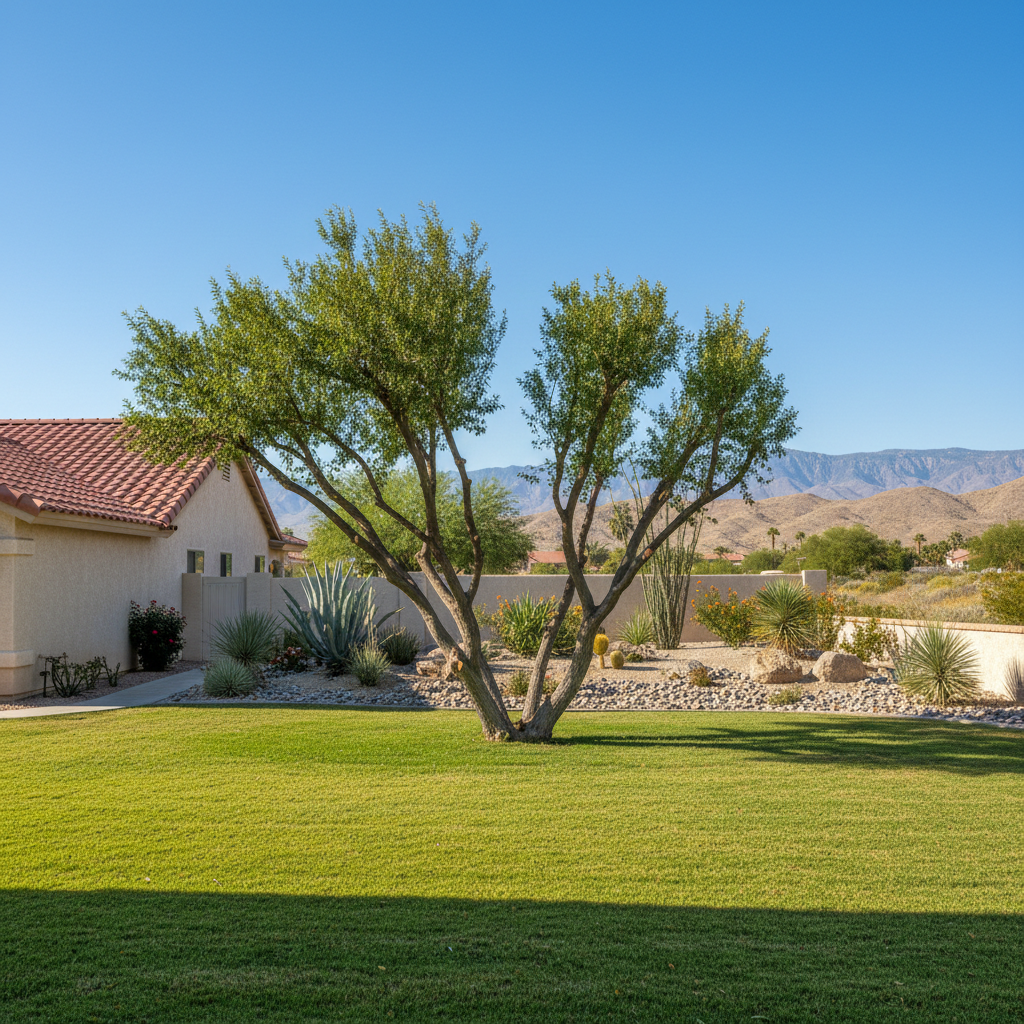
So, you just had your trees trimmed, maybe by us at Desert Hot Springs Tree Service, or another pro. Great! Now, how do you make sure that investment lasts? It's not just about the initial cut; it's about what happens next and what you watch for. You want those trees looking good and staying healthy for as long as possible, especially with our intense desert sun and those strong winds we get out here.
Extending the Life of Your Tree Trimming
You've paid good money to get your trees shaped up and healthy. To really get the most out of that work, you've got to think about a few things. First off, proper watering is huge. After a trim, a tree's energy is going into healing those cuts and pushing new growth. If it's stressed from lack of water, that healing slows down, and it's more susceptible to pests and disease. Here in Desert Hot Springs, especially during those long, hot summers where it can hit 120 degrees, deep, infrequent watering is way better than shallow, frequent sprinkles. You want to encourage roots to grow down, not just stay at the surface.
Another thing is mulching. A good layer of organic mulch around the base of your trees – not touching the trunk, mind you – does wonders. It helps retain soil moisture, keeps soil temperatures more stable (a big deal when the ground can get scorching hot), and slowly adds nutrients back to the soil. It also keeps weeds down, which compete for those precious water resources. I've seen too many folks skip this step, and it makes a real difference in how well a tree recovers and thrives after a trim.
Finally, don't forget about soil health. Our desert soil can be pretty alkaline and sometimes lacking in organic matter. A healthy soil biome means healthier roots, and healthier roots mean a healthier tree that can better withstand our climate and recover from trimming. Sometimes, a soil amendment or a slow-release fertilizer can give your trees the boost they need, but you gotta know what you're doing. Don't just throw stuff at it; get a soil test if you're unsure.
Regular Maintenance: What You Should Be Doing
Okay, so what does 'regular maintenance' actually look like for a homeowner? It's not about getting the big saws out every year. It's more about observation and small interventions. You should be regularly walking around your property and just looking at your trees. Are there any dead branches? Small ones you can reach with hand pruners? Get 'em out. Deadwood is an open invitation for pests and disease.
Look for suckers coming up from the base of the tree or water sprouts shooting straight up from branches. These are usually weak, fast-growing shoots that don't contribute much to the tree's structure and just suck up energy. Snip 'em off when they're small. It's a lot easier to deal with a few small sprouts than a thicket of them later on.
Also, keep an eye on clearance. Are branches growing too close to your house, power lines, or blocking pathways? You can often take care of small encroaching branches yourself with a pole pruner, but always be careful and know your limits, especially around power lines. We've got pretty strict rules about clearances here in California, and for good reason.
Warning Signs of Trouble
Even with good maintenance, trees can run into problems. Knowing what to look for can save you a lot of headache and expense down the road. One of the first things I tell people to watch for is unusual leaf color or size. Are the leaves turning yellow when they shouldn't be? Are they smaller than normal? That often points to a nutrient deficiency or a watering issue.
Look for signs of pests. Are there tiny holes in the leaves? Sticky residue? Webbing? Unusual bumps or growths on the bark or leaves? These could all be indicators of an insect infestation. Sometimes you'll see sawdust-like frass on the trunk or around the base, which is a dead giveaway for borers, and those guys can be really destructive.
Cracks in the trunk or major limbs, especially if they're deep or expanding, are serious. So are large sections of bark falling off. You also want to watch for mushrooms or fungal growths on the trunk or around the base. Fungi often mean there's internal decay happening, even if the tree looks okay from the outside.
And don't ignore sudden limb failure, especially if there's no obvious cause like a strong wind. If a healthy-looking branch just drops, that's a red flag that something might be structurally wrong with the tree.
When to Call a Professional
This is where Desert Hot Springs Tree Service comes in. You should absolutely call us or another certified arborist if you see any of those serious warning signs I just mentioned. If you've got large, dead branches high up in the tree, or any branches overhanging your house or power lines, that's not a DIY job. It's dangerous, and you could do serious damage or get hurt.
If you're unsure about the health of a tree, or if you suspect disease or a major pest infestation, get a pro out there. We can diagnose the problem and recommend the best course of action. Trying to treat a serious tree disease yourself can often do more harm than good.
Any time you're dealing with large limbs, working at significant heights, or using a chainsaw, you should probably call a professional. We've got the right equipment, the training, and the insurance to do the job safely and correctly. You want your trees to be an asset, not a liability, and sometimes that means bringing in the experts.