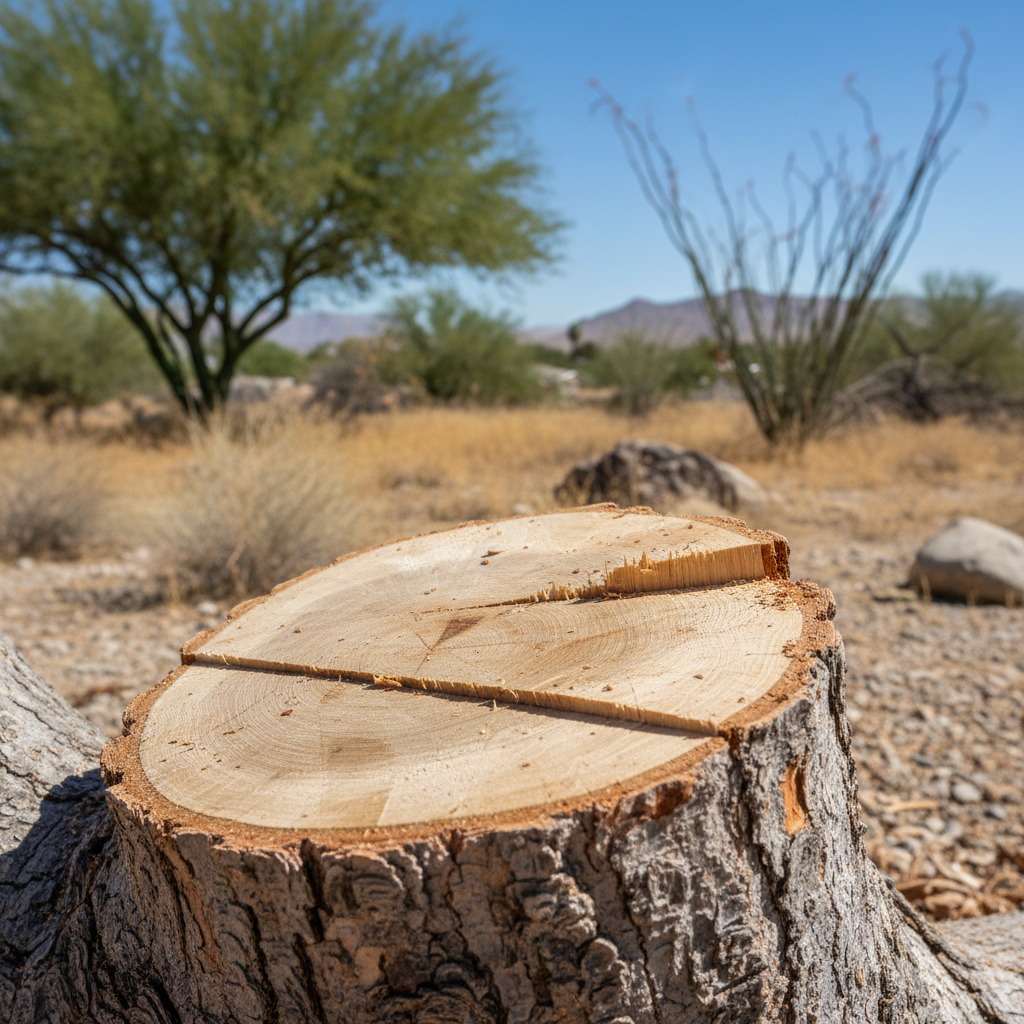
Alright, let's talk about trimming your trees. I see a lot of folks around Desert Hot Springs with good intentions, clippers in hand, ready to tackle their overgrown mesquite or palo verde. And look, I get it. Saving a buck feels good, and sometimes, a little snip here and there is all your tree needs. But there's a big difference between a little snip and a full-on trim job, and knowing that difference can save you a headache, or worse, a trip to the emergency room.
Before You Grab Those Pruners
First things first, take a good, hard look at the tree. Is it small enough that you can reach almost every branch safely from the ground or a sturdy, short ladder? We're talking about branches no thicker than your wrist, and nothing that requires you to stretch precariously. If you're looking up at branches that are higher than your head on a stepladder, or they're thicker than your forearm, you might be getting into pro territory already.
Think about the type of tree too. Some trees, like citrus or smaller desert shrubs, are pretty forgiving. Others, especially mature palm trees common in our area, require specialized tools and knowledge. You don't want to accidentally 'top' a tree, which is a common mistake that severely damages its long-term health and can make it dangerous in a windstorm. Understand what kind of tree you have and what its natural growth habit is.
What You Can Likely Do Yourself
You can absolutely handle light pruning and maintenance. This includes:
- Removing dead or diseased branches: If a branch is clearly dead (no leaves, brittle, discolored) and easily accessible, you can cut it back to healthy wood. Make sure to sterilize your tools with rubbing alcohol between cuts, especially if you suspect disease, so you don't spread it.
- Trimming small suckers and watersprouts: These are those fast-growing, often vertical shoots that pop up from the base of the tree or along main branches. They're usually thin and easy to remove with hand pruners.
- Clearing minor obstructions: If a small branch is just barely scraping your roof or blocking a walkway, and you can reach it safely, go for it. Just make sure you're not removing more than about 10-15% of the tree's canopy in a single season.
Always use sharp, clean tools. Dull tools tear the wood, making the tree more susceptible to pests and diseases. Make your cuts cleanly, just outside the branch collar – that slightly swollen area where the branch meets the trunk or a larger branch. Don't leave stubs, and don't cut flush against the trunk.
When It's Time to Call a Pro (Like Us!)
Here's where you need to be honest with yourself. If any of these situations apply, put down the saw and pick up the phone:
- Height and Size: If you need a ladder taller than 6-8 feet, or you're dealing with branches over 2-3 inches thick, it's a job for professionals. We've got the right equipment – ladders, ropes, harnesses, chainsaws – and the training to use them safely.
- Proximity to Power Lines: This is a non-negotiable. If any part of the tree is near power lines, even if it's not touching, do NOT attempt to trim it. Call the utility company first, then call a certified arborist. Electrocution is a real danger.
- Large or Heavy Branches: Cutting a big branch requires specific techniques to control its fall. If it falls wrong, it can damage your property, injure you, or even damage the tree itself by tearing bark.
- Structural Pruning: If your tree looks unbalanced, has crossing branches, or you're trying to improve its overall shape and health, that's structural pruning. It takes an understanding of tree biology and growth patterns to do it right without harming the tree.
- Palm Tree Trimming: Those fronds are heavy, sharp, and often high up. Plus, there's a specific way to trim palms to keep them healthy and looking good. Don't try to scale a 30-foot palm yourself.
- Trees with Decay or Damage: If you see signs of significant decay, large cracks, or extensive storm damage, the tree might be unstable. Working on it could be extremely dangerous.
Here in Desert Hot Springs, with our strong winds and sometimes unpredictable weather, a poorly trimmed tree can become a hazard quickly. We've seen trees come down in the wind that could have been prevented with proper structural pruning. It's not just about aesthetics; it's about safety for your home and family.
After the Trim
Once the trimming is done, whether by you or by Desert Hot Springs Tree Service, clean up the debris. Keep an eye on the tree in the following weeks. Look for signs of stress, like wilting or excessive sap leakage, though a little sap is normal after a fresh cut. Make sure it's getting enough water, especially during our hot summers. Proper watering helps the tree recover and heal its wounds.
Don't be afraid to ask for help when you need it. We're here to make sure your trees are healthy, safe, and looking good, without you having to risk life and limb. Sometimes, the smart move is knowing when to call in the experts. It's an investment in your property and your peace of mind.