What's the best way to water my trees in Desert Hot Springs' climate?
Watering trees correctly is probably the biggest challenge homeowners face out here in Desert Hot Springs. We have intense heat as well as very dry air. You cannot just set a sprinkler and forget it. For young trees, which are 0-3 years old, they need a good 5 gallons of water two to four times each week. This is because their root systems are still developing. For established, mature trees in Desert Hot Springs, you are looking at deep, infrequent watering. Most mature trees in California need watering about once a month during dry weather. The key is to water deeply, letting the water soak down 12-18 inches. You do not want to just do a shallow sprinkle. This deep watering encourages the roots to grow deeper, making the tree more drought-tolerant. You will want to focus the water around the drip line. That is the area under the farthest reaches of the branches, not right at the trunk. Using a soaker hose system or a drip system works great for this kind of watering. Our team always recommends watering in the early morning, before 10 a.m., to minimize evaporation. If you are watering in the evening, make sure the leaves have time to dry to prevent fungal issues.
How often should I fertilize my desert trees, and with what?
Less is often more when it comes to fertilizing trees in the desert. Our soils in Desert Hot Springs are different, and sometimes adding more fertilizer is not what they need. The best practice is to get a soil test done first. That test will tell you exactly what nutrients your soil is lacking. If you do need to fertilize, do it when the plants are actively growing. Do not fertilize during extreme heat, cold, or wet conditions. Fertilize before you are scheduled to irrigate, so the nutrients can dissolve and get to the roots. Our team always makes sure you water sufficiently after applying fertilizer to help it penetrate the soil. For Desert Hot Springs, we often have alkaline soils. Trees can sometimes show signs of chlorosis, which is yellowing leaves, because of iron deficiency. In those cases, a chelated iron product can make a big difference. Do not overdo it with fertilizer. Healthy trees are naturally more resistant to problems.
What are the most common tree diseases or pests I need to watch out for in DHS?
We see a few recurring issues here in Desert Hot Springs. For palms, which are everywhere in Desert Hot Springs, Fusarium Wilt is a big one. It is a fungus that causes wilting leaves and can kill a tree fast. There is no real cure for Fusarium Wilt, so prevention is important. Good drainage as well as proper care as well as buying healthy planting materials are key. Pink Rot is another fungal issue for palms, especially in moist conditions. For other tree species, we sometimes deal with things like Anthracnose. This is a fungal disease that causes leaf spots as well as premature leaf drop, especially in wet, cool conditions. While it rarely kills a mature tree, it can weaken it. Bark beetles are also a threat to trees in Desert Hot Springs. They bore into the bark and disrupt nutrient flow. Stressed trees, especially from drought, are more susceptible to bark beetles. The best defense against most diseases and pests is a healthy, well-maintained tree. Regular inspections can catch problems early.
Can tree roots really damage my home's foundation?
This is a common concern for homeowners in Desert Hot Springs. Tree roots generally do not actively seek out and break through solid foundations. They are opportunistic. If your foundation is solid and crack-free, roots usually grow around it or deeper into the soil. However, if you have already got tiny cracks in your foundation, tree roots will absolutely find those cracks. They will get in and then expand them as they grow. This can lead to bigger structural issues, especially with our expansive clay soil here in Desert Hot Springs. Our clay soil can shift with moisture changes. Some trees, like willows or sycamores, have more aggressive root systems. If you have a large tree close to your house, it is smart to have it assessed. You can consider root barriers, or sometimes removing the offending tree is the only solution if it is a major problem.
How can I protect my trees during our extreme summer heat waves?
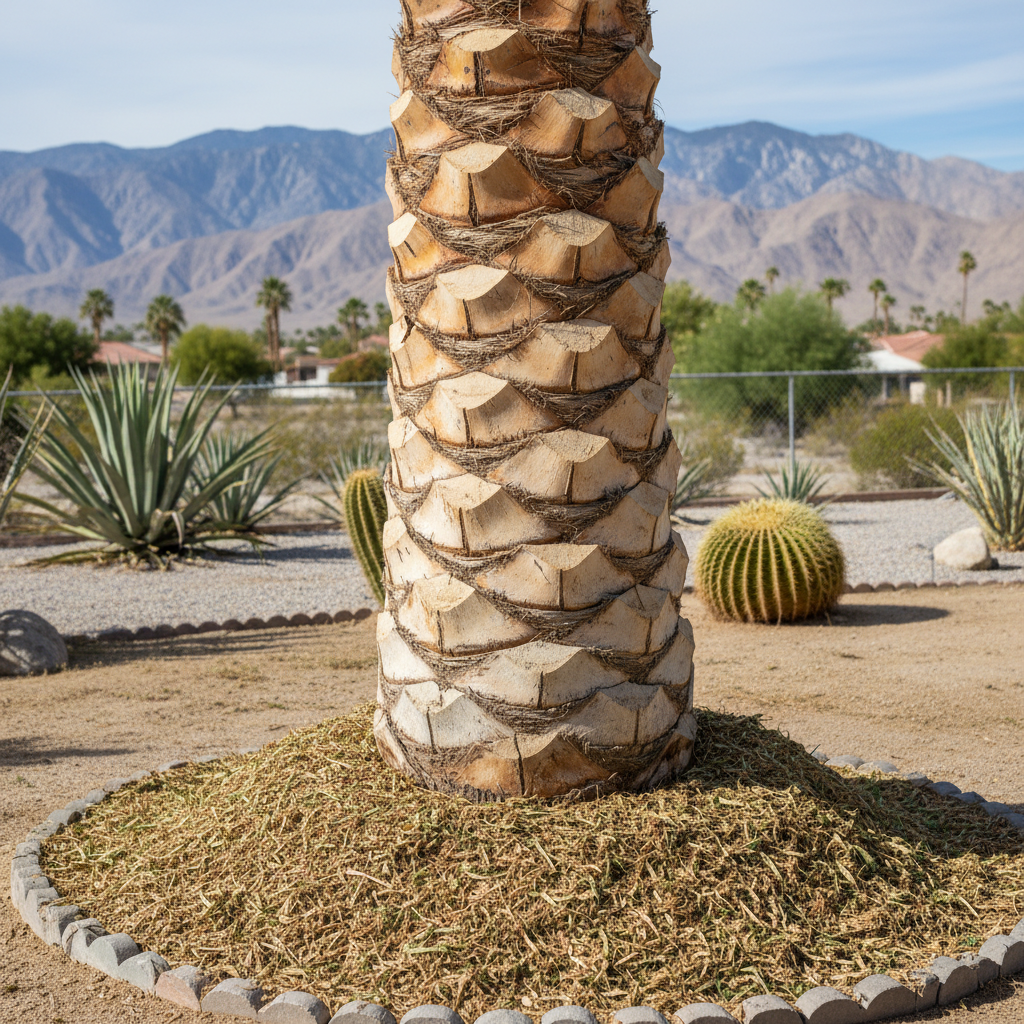
Our summers in Desert Hot Springs are no joke, and trees feel it too. First, proper watering is important. Deep and infrequent watering in the early morning is best. You might need to increase the frequency for young trees during heat waves. Second, mulch is your best friend for your trees. A 3-4 inch layer of organic mulch around the base of your trees helps retain moisture. Make sure to keep it a few inches away from the trunk. Mulch also keeps the soil cooler and suppresses weeds. Light-colored mulch is even better because it reflects sunlight. Third, consider temporary shade for your trees. For smaller or newly planted trees, a shade cloth can make a big difference. This is especially true on the west or southwest side where the afternoon sun is brutal. Even a patio umbrella can offer some relief during those really scorching days. Keeping the roots cool is important, so remove any dark rocks or gravel near the base that can absorb and radiate heat.
What are some good drought-tolerant tree options for Desert Hot Springs?
Choosing the right tree for our desert environment in Desert Hot Springs is half the battle. You want something that can handle the heat and does not need a ton of water once it is established. Some great options that do well in Southern California's dry climate include the California Fan Palm. This is our only native palm. Other good choices are Desert Willow as well as Palo Verde as well as Mesquite. These trees have evolved to thrive here in Desert Hot Springs. They often have deep root systems or other adaptations to conserve water. For example, the Palo Verde has green bark that photosynthesizes. This reduces its reliance on leaves during dry spells. The Desert Willow is known for its beautiful flowers as well as its ability to handle sandy soil. When you are picking a tree, think about its mature size as well as how much sun it will get. Planting the right tree in the right place means less hassle and a healthier tree for you down the line.