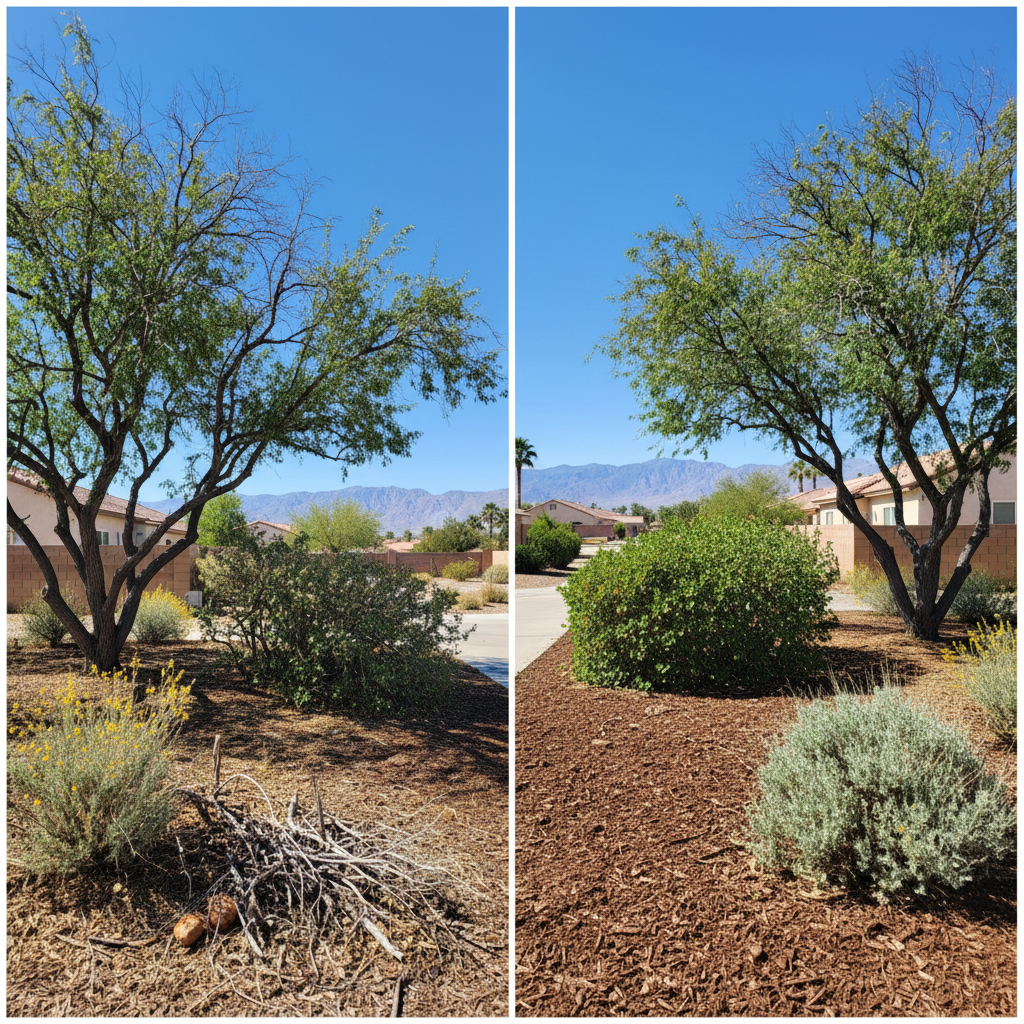
If you have lived out here through a few brutal Coachella Valley summers, you already know our climate is not forgiving on yard plants. Between the intense dry heat and those howling winds whipping down off the San Gorgonio Pass, your landscaping takes a constant beating. When it comes time to clean up the yard, homeowners generally lean toward one of two trimming methods: structural hand pruning or mechanical shearing. Both methods work, but they lead to very different results over the long haul.
The Hard Shearing Approach
Most residents are familiar with the mechanical hedge trimmer approach. You rev up the gas or battery-powered blades and shear every bush into a neat, geometric ball or a crisp, flat-topped hedge. It is fast, looks instantly manicured, and gives the whole property a tidy look by Sunday afternoon. If you are prepping a rental property or just want a uniform appearance with minimal fuss, this method seems like an obvious choice.
The catch? Shearing takes a heavy toll on desert shrubs like sage, cassia, or hopseed. When you slice indiscriminately across the outer canopy, you trigger a dense flush of twiggy growth right at the surface. Over time, that outer shell becomes so thick that sunlight cannot reach the interior. The inside of your bushes turns into a hollow maze of dead wood and dry twigs, which becomes a prime fire hazard during our dry months. Plus, stressed plants burn faster when July temperatures peak.
Selective Structural Pruning
The alternative is selective hand pruning using bypass loppers and hand shears. Instead of lopping off the outer edges into a uniform shape, you reach inside the canopy and cut specific branches back to their source. It takes considerably more time and patience, and you will not get that razor-sharp box shape right away.
However, this method preserves the natural health and resilience of the plant. Air can circulate freely through the branches, which keeps local pests from setting up camp in the dense center. More importantly, it lets sunlight penetrate the core, encouraging steady, healthy growth all the way through rather than just a fragile green shell on the outside. When high winds sweep through Desert Hot Springs, structurally thinned bushes let the breeze pass right through instead of catching it like a solid sail and pulling up roots.
Cost and Maintenance Realities
Looking at the initial price tag, mechanical shearing wins on labor speed. It takes less time, meaning lower costs upfront if you are hiring help. But structural pruning actually wins on long-term durability. Sheared shrubs tend to decline faster in our desert environment, often requiring total replacement after a few years of severe branch dieback. Hand-pruned plants adapt better to local soil conditions and bounce back quicker from seasonal stress.
Desert Hot Springs Tree Service usually recommends a hybrid approach depending on the specific plant species and where it sits on your property. Formal entryway hedges might need a light pass with shears to keep things looking sharp, but native and desert-adapted shrubs always thrive better with thoughtful hand thinning. Give your landscape room to breathe, and it will reward you by surviving the next heatwave without turning into a pile of dry tinder.